

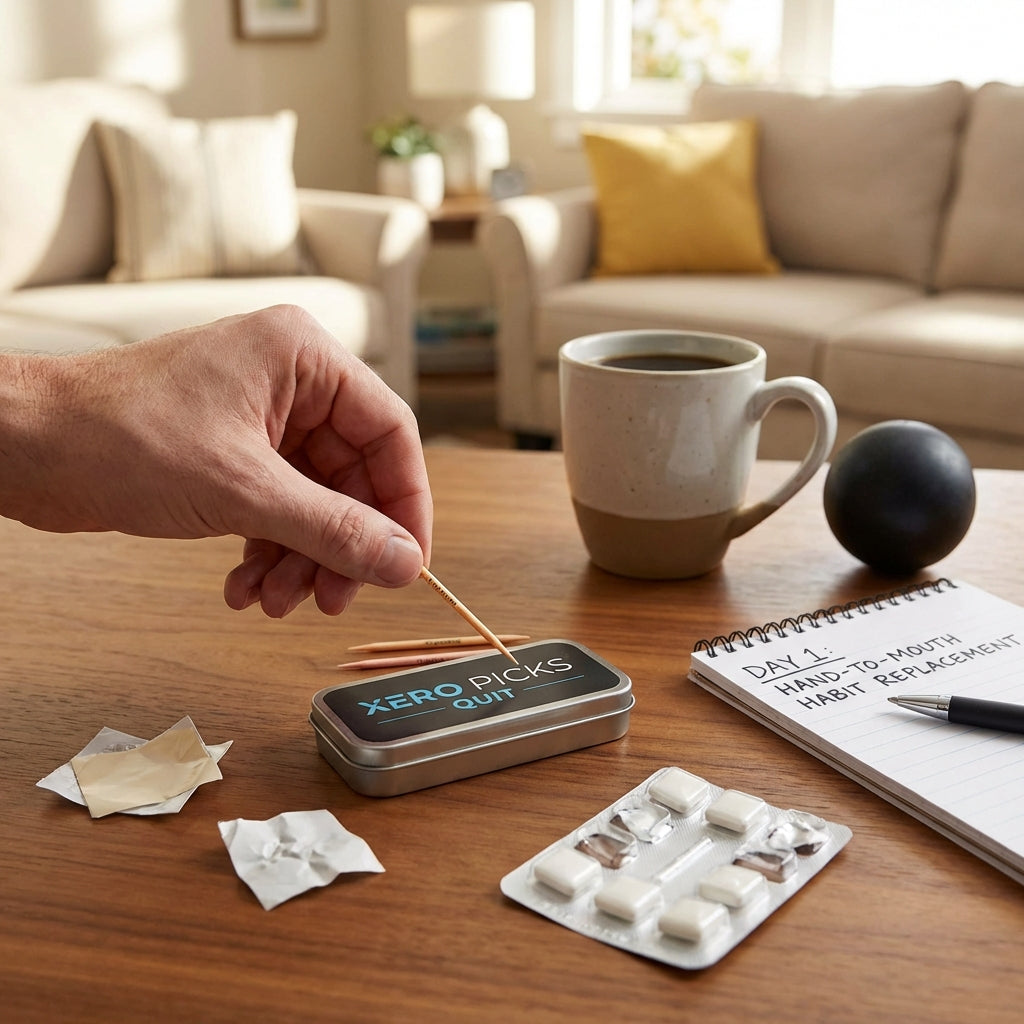
Best Nicotine-Free Alternatives to Gums and Patches for Smoking Cessation
Why Traditional Nicotine Replacement Fails Most Smokers
We've watched countless people struggle with nicotine replacement therapy (NRT) options like gums, patches, and lozenges, and the data tells a compelling story. About 90% of smokers who quit without professional support relapse within a year. Even with traditional NRT, success rates hover around 25-35%. The reason isn't complicated: these methods only address half the problem.
Most NRT solutions focus exclusively on delivering nicotine to manage physical withdrawal. They treat smoking as a chemical dependency alone. But here's what the research and real-world experience reveal: the psychological and behavioral component of smoking is often stronger than the nicotine craving itself. A smoker reaching for a cigarette isn't just seeking nicotine. They're seeking the ritual, the hand-to-mouth motion, the moment of pause in their day, and the oral stimulation their brain has trained itself to crave.
Patches deliver steady nicotine without satisfying any of these behavioral needs. Gums provide some oral stimulation but create an awkward chewing motion that feels nothing like smoking and often causes jaw discomfort. Lozenges dissolve slowly and sit uncomfortably in the mouth. None of these options replicate what your brain actually learned to expect from smoking.
What to do next: Before exploring any cessation tool, acknowledge that quitting requires addressing both the chemical dependency and the ingrained habit pattern. This dual approach dramatically improves your odds.
The Hand-to-Mouth Problem: Why Habit Matters More Than Nicotine
After years of smoking, your hand-to-mouth ritual becomes neurologically wired into your daily routine. You reach for a cigarette during phone calls, after meals, during stressful moments, and during downtime. That motion is as automatic as blinking. When you quit, your hands feel empty. Your mouth feels understimulated. The behavioral vacuum is often what drives relapse, not the nicotine itself.
This is why many smokers report that nicotine patches work fine chemically but fail behaviorally. Your brain isn't satisfied because it isn't getting the habitual reinforcement it expects. You're left white-knuckling through cravings that aren't primarily about nicotine anymore, but about the absence of the familiar oral habit.
The most effective quit attempts address this head-on. You need something you can hold, something you can place in your mouth, something that provides immediate sensory feedback, and something that feels intentional rather than medicinal. The goal is to break the smoking habit while giving your brain a new oral ritual that actually satisfies the behavioral craving.
What to do next: Identify your specific trigger moments for smoking. Is it after meals? During breaks? During stress? Your replacement tool needs to be portable and convenient enough to use in those exact moments.
How We Engineered a Better Solution for Craving Management
We recognized that the most effective smoking cessation approach would need to satisfy three criteria simultaneously: deliver functional ingredients that support mental clarity during withdrawal, provide genuine oral stimulation through texture and flavor, and enable the hand-to-mouth ritual that smoking trained your brain to crave.
Our team developed patented deep-infusion technology that allows us to embed active ingredients directly into a toothpick form factor. This wasn't about copying existing formats. We specifically chose the toothpick because it's small enough to carry anywhere, discrete enough to use in professional settings, and mimics the hand-to-mouth motion of smoking without the stigma or health risks.
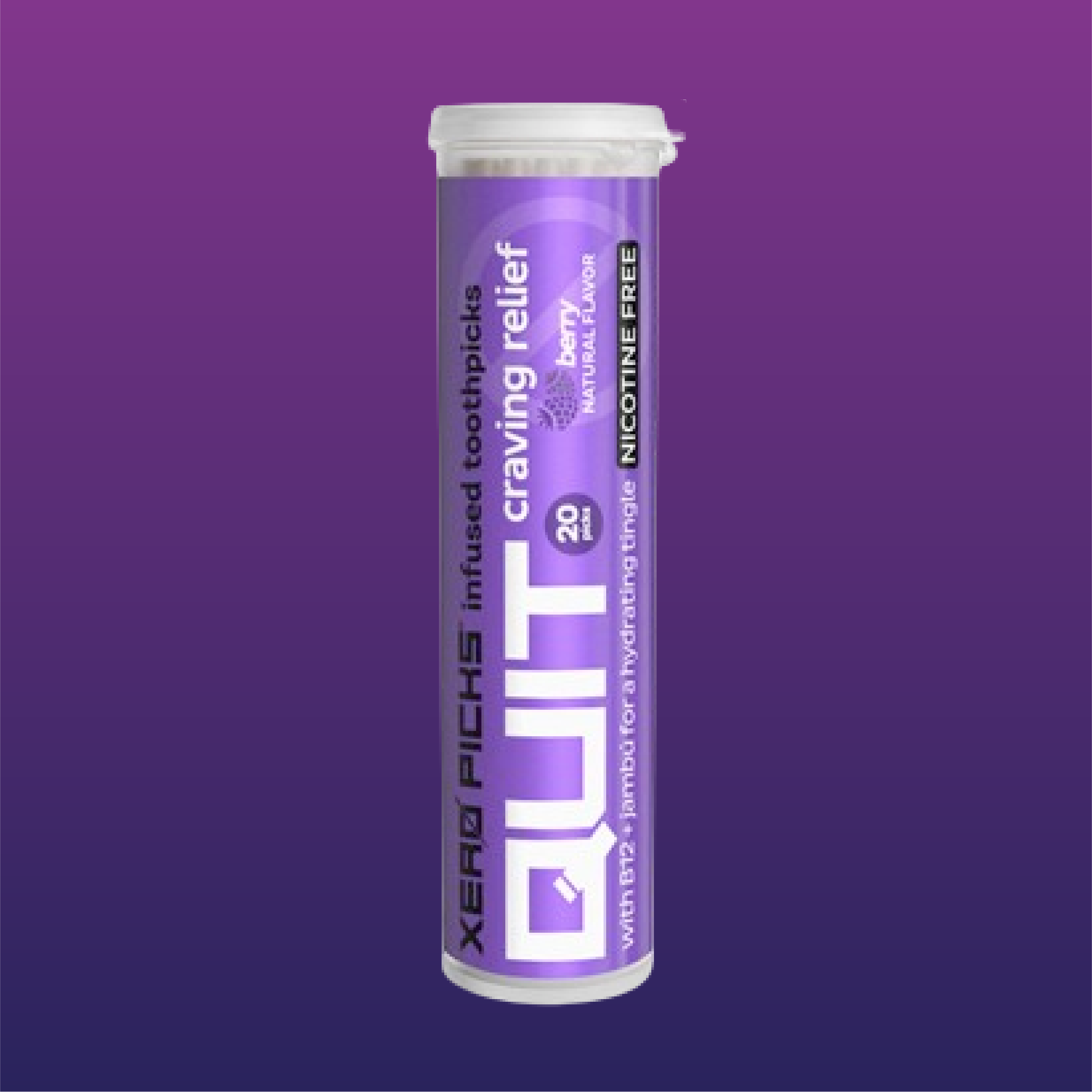
We infused our Quit Smoking Toothpicks with B12, a vitamin that supports mental focus and helps reduce stress during the withdrawal period when your nervous system is recalibrating. The toothpick format means you're not swallowing a pill or chewing something awkwardly. You're placing an active ingredient delivery device in your mouth exactly as your brain expects during a smoking craving.
The flavor profile matters too. We engineered bold, mouth-watering flavors that stimulate saliva production and provide the sensory reward your brain associates with smoking. This isn't subtle. The flavor is intentionally strong and immediately noticeable, creating a positive reinforcement loop that your brain recognizes as satisfying.
What to do next: Understand that an effective cessation tool doesn't need to contain nicotine. It needs to satisfy the behavioral and sensory components of the smoking habit while supporting your body through withdrawal.
Xero Picks Quit: The Functional Toothpick Alternative That Works
Our Quit line specifically targets smokers in active cessation. Each toothpick delivers B12 to support mental focus and stress reduction during withdrawal. The experience starts immediately. You place the pick in your mouth, and the bold flavor profile activates instantly. The natural ingredients stimulate saliva flow and create a mouth-watering sensation that satisfies the oral craving without any chemical dependence.

What sets our approach apart is the tingle sensation you'll experience on your lips and tongue. This isn't a side effect. It's intentional. We infuse jambu oleoresin, a concentrated extract from the spilanthes acmella plant traditionally used for oral relief. This natural compound activates the nerve pathways in your mouth and amplifies your sensory experience of the flavor and functional ingredients. This activation is what creates genuine oral satisfaction.
The experience lasts 25-40 minutes per use, which means a single toothpick carries you through an entire trigger moment and beyond. You're not constantly reaching for replacements. One pick provides substantial relief and behavioral satisfaction.
These are sugar-free and calorie-free, so you're not replacing a smoking habit with a sugar habit. You're addressing the behavioral and sensory components of smoking without introducing new health concerns or dietary complications.
What to do next: Start with one Quit toothpick during your strongest craving moment of the day. Notice how the flavor, the tingle, and the hand-to-mouth ritual satisfy the components of your smoking habit you didn't realize you were missing.
Key Advantages Over Gums, Patches, and Lozenges
Let's compare the experience across the four most common cessation approaches.
Gums require constant chewing, which feels artificial and can cause jaw fatigue. They don't satisfy the hand-to-mouth ritual because you're holding something briefly then chewing. The flavor fades quickly, requiring frequent replacement. Many people report that nicotine gums trigger nausea or mouth irritation.
Patches deliver nicotine continuously but provide zero behavioral satisfaction. Your hands feel empty. Your mouth feels unstimulated. You're treating the chemical dependency while ignoring the behavioral component that often matters more. Patches also require daily changes and can cause skin irritation at the application site.
Lozenges sit awkwardly in your mouth and dissolve slowly. They provide some oral stimulation but aren't associated with the hand-to-mouth motion smokers crave. The slow dissolution means inconsistent ingredient delivery and a prolonged aftertaste that many find unpleasant.
Our Quit Toothpicks combine the best aspects of all three while eliminating their shortcomings. You hold something small and satisfying in your hand, place it in your mouth with intentional motion, receive immediate flavor and functional ingredient delivery, experience genuine oral stimulation through the tingle sensation, and get behavioral satisfaction that makes the ritual feel meaningful rather than medicinal.
The toothpick format also means discretion. You can use one in a workplace, a car, or any social setting without drawing attention or creating awkwardness. No one thinks twice about someone using a toothpick. It's a completely normal behavior, which reduces the psychological burden of quitting.
What to do next: If you've tried gums, patches, or lozenges and struggled, recognize that the problem wasn't your willpower. It was likely that the replacement wasn't addressing your actual behavioral needs.
How Our Infusion Technology Delivers Real Results
Our patented deep-infusion process embeds B12 and flavor compounds directly into the toothpick's structure, not just on its surface. This means the flavor and functional ingredients persist throughout the entire 25-40 minute experience. You're not getting a burst of flavor that quickly fades, followed by a bland wait. The entire experience remains consistent and satisfying.
The infusion process also allows us to control the concentration and release rate of B12. Unlike a pill that your stomach must break down, the toothpick delivers B12 directly into your oral cavity and throat, allowing faster absorption and more immediate mental clarity support. This matters during withdrawal because your brain needs that focus support quickly.
B12 specifically supports mental energy and helps reduce the fatigue and brain fog that accompany nicotine withdrawal. It also plays a role in stress reduction, which is critical during the first few weeks of quitting when your nervous system is recalibrating.
The jambu oleoresin infusion creates the signature tingle that stimulates your mouth's nerve pathways. This isn't just sensory novelty. It's activating the same oral satisfaction centers that smoking stimulated. Your brain recognizes this as a genuine reward, which reinforces the new habit and makes the transition easier.
What to do next: Try to notice the full sensory experience during use. The bold flavor, the tingle, the saliva stimulation, and the sense of ritual completion are all components working together to satisfy your brain's expectations.

Supporting Your Mental Focus During Withdrawal
Smoking cessation isn't just about removing nicotine from your system. It's about supporting your brain through a period of significant change. Nicotine withdrawal typically peaks within the first 24-72 hours and gradually subsides over weeks. During this period, concentration becomes difficult, irritability increases, and cravings feel overwhelming.
B12 addresses multiple components of this challenge. It supports dopamine production, which is crucial because smoking elevated your dopamine levels through nicotine. As those levels normalize, your brain initially feels the absence. B12 helps smooth this transition by supporting your nervous system's natural dopamine balance. This doesn't replace the dopamine boost smoking provided, but it prevents the sharp crash that makes early quitting so painful.
Mental fatigue during withdrawal is real and often underestimated. Your brain is working overtime to recalibrate reward pathways that have been synchronized to smoking for months or years. B12 supports mental energy and cognitive function, helping you maintain focus at work and reducing the mental fog that makes cravings feel worse.
The behavioral satisfaction of using a Quit toothpick also supports mental focus in a different way. Every time you successfully use a toothpick instead of smoking, you're creating a new neural pathway. You're teaching your brain that the toothpick-ritual provides satisfaction. After repetition, this new pathway becomes automatic, just as the smoking pathway became automatic. This shift happens faster when each replacement experience genuinely satisfies your sensory and behavioral expectations.
What to do next: Plan for the mental fog and fatigue of early withdrawal. Use your Quit toothpicks strategically during your most vulnerable times, not just when you remember.
Real-World Usage: Convenience and Discreetness Combined
One of our core design principles was creating something you'd actually want to carry and use. Most cessation tools feel medical and conspicuous. Our toothpicks feel completely normal in any context.
Scenario: You're in a meeting, and the urge to smoke hits. You can't leave to use a patch. Gum is conspicuous. A lozenge is awkward. But pulling out a toothpick? That's unremarkable. You're simply freshening your mouth, which is socially normal and expected. No one questions it.
Scenario: You're driving, and a powerful craving emerges. You need something you can use with one hand while keeping your other on the wheel. A toothpick is perfect. You pop it in, and within minutes, the flavor and tingle provide genuine relief. You're not fumbling with gum or waiting for a lozenge to dissolve.
Scenario: You're at a social event where people used to smoke. Your hands feel empty. You need something to do with them. You pull out a toothpick, place it, and immediately engage the hand-to-mouth ritual. This addresses the behavioral component of smoking that people often underestimate.
Our toothpicks are pocket-sized and require zero preparation. No wrapper wrestling like gum. No application ritual like patches. You simply carry a small pack and use one during a trigger moment. The 25-40 minute duration means one pick carries you through most craving episodes.
The bold flavor and tingle sensation also mean you're not using passively. Each moment feels intentional and satisfying. You're not going through the motions hoping relief arrives. You're receiving immediate sensory feedback that your brain recognizes as a meaningful replacement.
What to do next: Identify the places and situations where you'll carry your Quit toothpicks. Keep them in your car, your desk, your pocket, and your bedside. Accessibility during trigger moments dramatically improves success rates.
Making the Switch: Your Step-by-Step Quit Plan
Successful transition requires planning, not willpower alone. Here's how we recommend approaching the switch.
Week 1: Identify Your Triggers
Track every smoking urge for three days. Note the time, situation, emotional state, and intensity on a scale of 1-10. You'll start seeing patterns. Most smokers have 5-8 consistent trigger situations throughout the day.

Week 2: Stock Your Strategic Locations
Place Quit toothpicks in every location where triggers occur. If breakfast is a trigger, keep them on your nightstand and kitchen counter. If work stress is a trigger, keep them at your desk. If driving is a trigger, keep them in your car. Accessibility during moments of weakness is non-negotiable.
Week 3: Use During High-Intensity Triggers
Don't try to replace every smoking moment immediately. Start with your two highest-intensity triggers. Use a Quit toothpick when you feel the urge at those moments. Notice the sensory experience. Let your brain begin rewiring the habit pattern.
Week 4: Expand Gradually
Add one more trigger moment each week. You're not forcing a complete switch immediately. You're gradually replacing the most difficult smoking moments while your brain adapts.
Week 5 Onward: Maintain and Monitor
By this point, you've created several new habit loops. Your brain is beginning to recognize the toothpick ritual as satisfying. Continue using during all trigger moments. The urges typically decrease in intensity and frequency around week 3-4.
The nicotine-free replacement kit gives you variety, which helps prevent sensory habituation and keeps the experience fresh and rewarding. Different flavors provide novelty while maintaining the same behavioral satisfaction.
What to do next: Schedule a specific start date. Your brain responds better to intentional shifts than gradual, unplanned reductions. Choose a date and commit.
Why Xero Picks Quit is Your Definitive Choice
We designed Quit toothpicks specifically for people who've tried other cessation methods and struggled. This isn't a one-size-fits-all approach. This is a product engineered to address the specific reasons most people fail: the behavioral void, the lack of oral satisfaction, and the mental fatigue of withdrawal.
Traditional methods treat smoking as a nicotine problem. We treat it as a complete problem that includes chemical dependency, behavioral habit, and sensory need. Our solution addresses all three simultaneously through a single, discrete, effective delivery device.
The patented infusion technology means the experience is consistent and satisfying from the first toothpick to the last. The B12 support means your brain gets the functional help it needs during the vulnerable early weeks. The bold flavors and jambu-driven tingle mean your mouth feels genuinely stimulated and rewarded, not deprived.
The hand-to-mouth ritual remains intact. The discretion in any setting remains intact. The behavioral satisfaction remains intact. What's different is that you're building a new habit that supports your health rather than compromising it.
Success rates with cessation tools increase dramatically when the tool actually satisfies the multi-dimensional needs of the smoker. We've specifically engineered Quit to do exactly that. You're not asking your brain to accept an inferior replacement. You're offering it a replacement that genuinely addresses what it learned to crave.
The data supports this approach. Behavioral satisfaction matters as much as chemical intervention in smoking cessation. When smokers use a replacement that satisfies both, relapse rates drop significantly. When they use replacements that address only the chemical component, they struggle with the behavioral void and eventually return to smoking.
Your definitive choice is a solution that treats quitting as the complete challenge it actually is. Xero Picks Quit does exactly that.
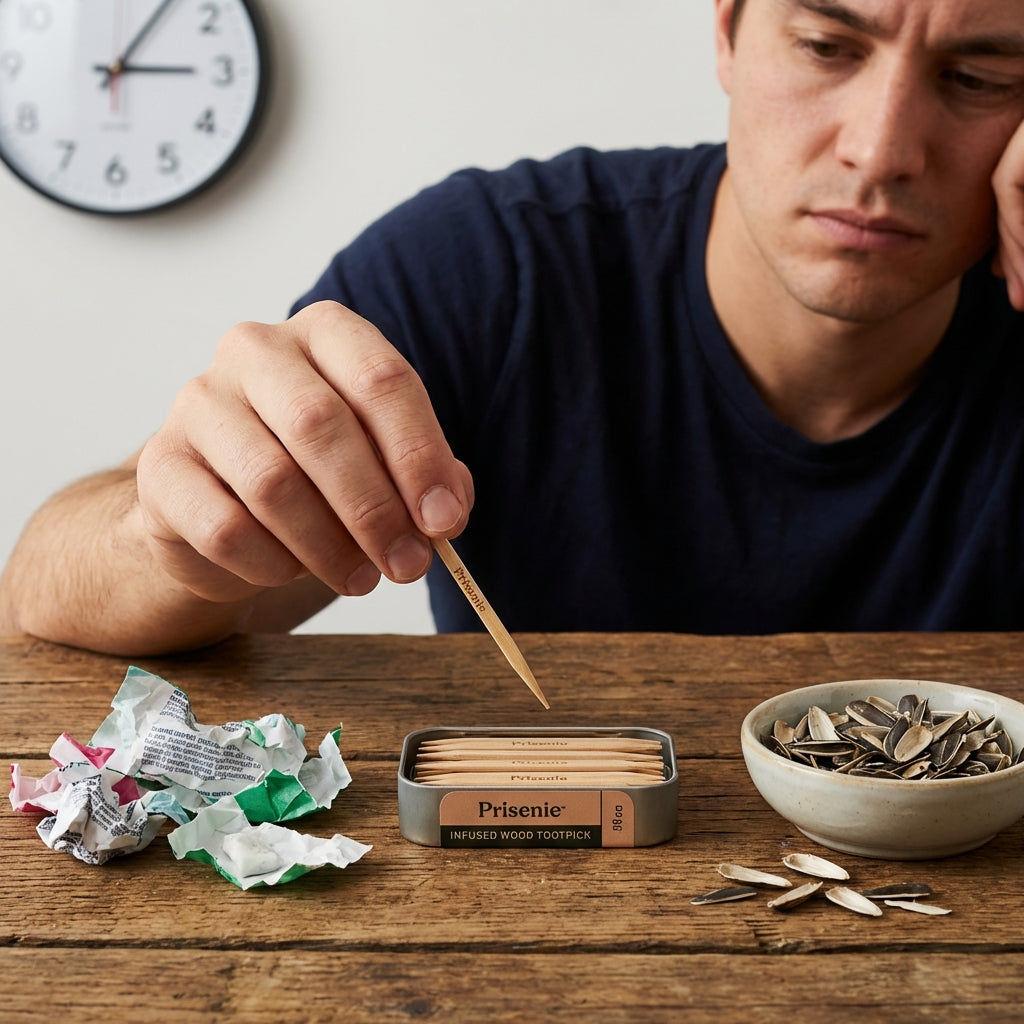

%20options%20like%20gums,%20patches,%20and%20lozenges,%20and%20the%20data%20tells%20...)