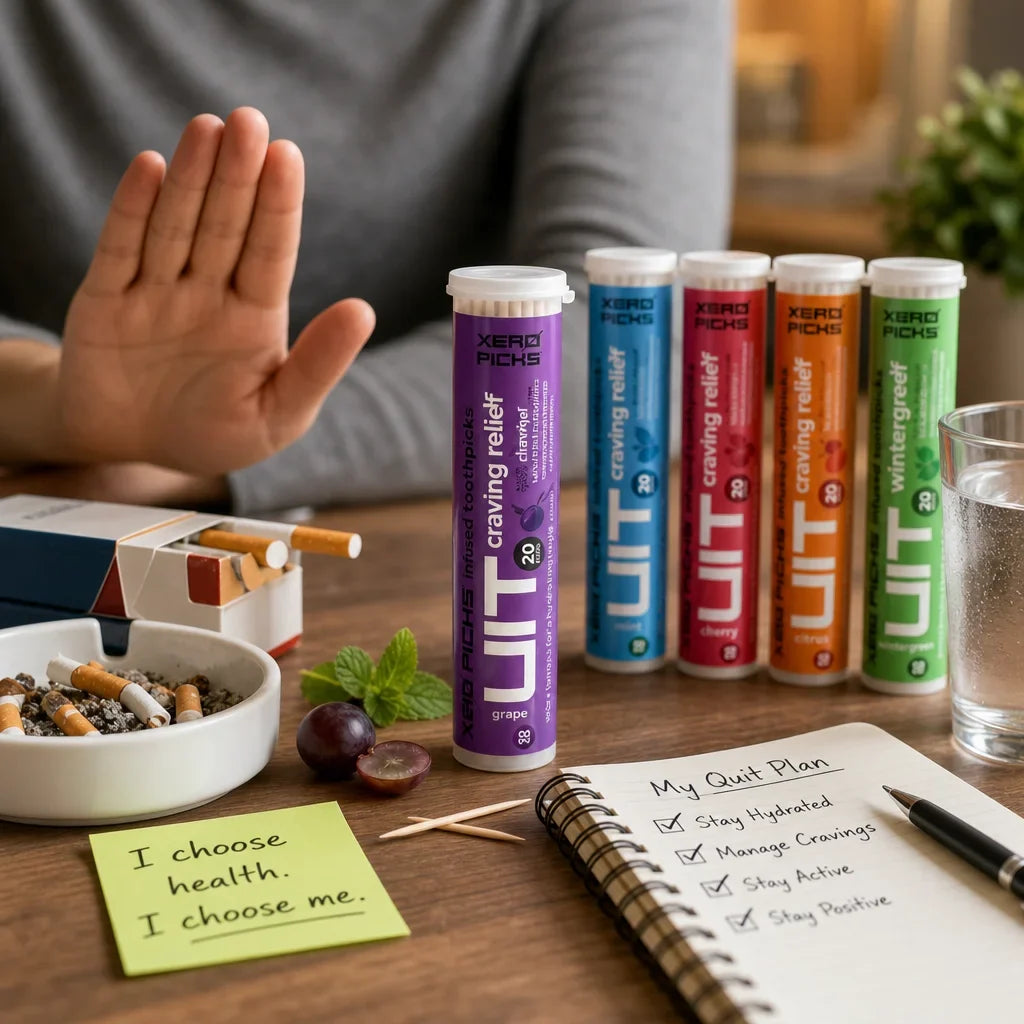
Functional Oral Tools: Your Essential Gear for Successful Smoking Cessation
Table of Contents
- Why Traditional Quit-Smoking Methods Fall Short
- The Hand-to-Mouth Habit: Understanding Your Real Challenge
- How Functional Oral Tools Address the Root Problem
- What Makes Our Nicotine-Free Solution Different
- Building Your Personalized Cessation Toolkit
- Combining Multiple Tools for Maximum Success
- Real-World Strategies: Using Oral Tools Throughout Your Day
- The Science Behind Saliva Stimulation and Stress Relief
- Supporting Your Mental Focus During the Transition
- Creating Sustainable Habits That Stick
- Your Path Forward: Getting Started Today
- Frequently Asked Questions (FAQ)
Why Traditional Quit-Smoking Methods Fall Short
When you decide to quit smoking, the standard advice often comes down to two things: medication or sheer willpower. But here's what most people don't realize: willpower alone isn't enough, and medication doesn't address the entire problem.
Traditional cessation aids typically focus on one aspect of smoking, usually nicotine dependence. The problem is that smoking isn't just a chemical habit. It's a ritual. It's a hand-to-mouth action repeated dozens of times a day. It's a moment of pause during stress. It's a social cue. It's comfort when you're bored.
Most quit-smoking approaches ignore this behavioral layer entirely. They treat the chemical craving but leave the habitual void wide open. That's why people often feel successful for a few weeks, then find themselves reaching for a cigarette again, even when their body no longer needs the nicotine. The ritual itself has become the trap.
The gap between managing physical cravings and replacing the behavior is where most people struggle. Functional oral tools fill that gap by giving your hands and mouth something purposeful to do when the urge strikes.
The Hand-to-Mouth Habit: Understanding Your Real Challenge
Your smoking habit is made up of two distinct layers: chemical dependence and behavioral repetition. Understanding this distinction is crucial because it changes how you approach quitting.
The physical component comes from nicotine, which triggers dopamine release and creates a real chemical feedback loop. But the behavioral component is equally powerful, if not more so. Smokers often report that they miss the hand-to-mouth motion as much as they miss the nicotine itself. That repetitive action becomes hardwired into your daily rhythm.
Think about when you typically smoked:
- After meals
- During coffee breaks
- While driving
- When stressed or frustrated
- In social settings
- During phone calls
- When bored or waiting
These moments aren't primarily about nicotine cravings. They're about the muscle memory of reaching for something and bringing it to your mouth. They're about the sensory experience and the temporary shift in focus.
This is why simply replacing cigarettes with nothing rarely works. Your brain still expects that oral ritual. Your hand still knows where to go. A functional oral tool fills that space without reintroducing the harmful behavior.
How Functional Oral Tools Address the Root Problem
Functional oral tools work because they acknowledge that quitting smoking requires more than just managing nicotine withdrawal. They address the behavioral component head-on while supporting your overall wellness during the transition.
Here's how they work differently:
They give your hands and mouth a job. When the urge hits, you have something tangible to reach for. This redirects the habit reflex from cigarettes to something healthy.
They provide sensory engagement. Flavor, texture, and the ritual of using them satisfy the sensory component that smoking provided. Your mouth stays engaged and stimulated.
They deliver practical benefits. Unlike cigarettes, functional oral tools can support energy, freshness, or craving relief depending on what you need. They work with your body instead of against it.
They break the association loop. Each time you use a functional tool instead of a cigarette in a trigger moment, you're rewiring that association. After coffee? You reach for your tool instead. Stressed? Same thing. Over time, these new patterns become automatic.
The key advantage is that functional oral tools don't just subtract something from your life (cigarettes). They add something better. This positive swap feels sustainable in a way that pure deprivation rarely does.
What Makes Our Nicotine-Free Solution Different
We designed our infused toothpicks from the ground up specifically for people like you, who are actively working to replace unhealthy oral habits with something smarter.

Our approach is different in three important ways:
Deep-infusion technology. We don't just coat the surface of our toothpicks. Our patented infusion process embeds flavor and functional ingredients throughout the entire pick. This means you get a long-lasting experience, not just a quick hit. A single pick can last through multiple cravings, making it practical for real life.
Functional without compromise. Our nicotine-free formula focuses on what actually helps during the transition: calorie-free craving support, energy through B-vitamins and caffeine options, and stimulation to support saliva production. You get real wellness benefits without the addictive substance holding you back.
USA-made quality. We control every step of production to ensure consistent, high-quality picks you can trust. No shortcuts, no filler ingredients. Just functional tools built for people serious about change.
When you're actively working to quit smoking, you need something that works as hard as you do. That's what we've built.
Building Your Personalized Cessation Toolkit
Successful quitting rarely relies on a single tool. Instead, think of quitting as assembling a toolkit where each piece serves a specific purpose.
Your toolkit might include:
Functional oral tools for habit replacement. These handle the behavioral component by giving you something to do with your hands and mouth when the urge strikes.
Stress management strategies. Many people smoke when stressed. Breathing exercises, short walks, or other quick resets become crucial during high-stress moments.
Physical activity or stretching. Movement redirects your focus and reduces physical cravings naturally.
Hydration and nutrition support. Keeping your mouth fresh and your energy stable reduces the triggers that lead to cravings.
Social support or accountability. Whether it's friends, family, or a quit-smoking community, having people who understand your goal matters.
The combination matters more than any single element. A functional toothpick handles the 3 p.m. coffee ritual. A quick walk handles the post-lunch stress moment. Extra water handles the dry-mouth sensitivity. Together, they create a system that works.
Start by identifying your three biggest trigger moments. What times of day do you crave most? What emotions or situations drive the habit? Build your toolkit around those specific moments first.
Combining Multiple Tools for Maximum Success
The research is clear: people who use multiple strategies succeed at higher rates than those relying on a single approach. But combining tools effectively takes strategy, not just hope.
Start with this framework:
Layer one: Replacement. Whenever you encounter your typical smoking trigger, you immediately reach for your functional oral tool instead. This handles the behavioral reflex.
Layer two: Distraction or movement. If the urge persists after a few minutes with your tool, engage a secondary strategy. This might be a short walk, a phone call, or a glass of water.
Layer three: Perspective. Remind yourself why you're quitting. This mental reset often dissolves the remaining craving within minutes.
Combining these layers gives you options. If your functional pick isn't enough in a moment, you have a next step. This removes the all-or-nothing pressure that derails many people.
The goal isn't perfection. It's having a plan so that when cravings hit, you're not improvising. You're executing. Execution builds confidence, and confidence builds momentum.
Real-World Strategies: Using Oral Tools Throughout Your Day

Functional oral tools work best when you integrate them intentionally into your daily routine. Here's how to make them part of your life, not just an emergency backup.
After meals. This is a classic smoking trigger. As soon as you finish eating, reach for your tool before you even think about a cigarette. The flavored pick satisfies the mouth stimulation you're craving.
During work stress or focus challenges. Keep a few picks on your desk. When tension builds or focus dips, using a pick accomplishes two things: it addresses the stress-smoking connection, and it can support mental clarity depending on which pick you choose.
While driving or commuting. This is a high-trigger time for most smokers. Having picks in your car means you're never caught unprepared. The ritual of reaching for a pick becomes the new driving habit.
In social settings. If you typically smoked with friends, having your picks visible signals to others that you're making a change. Often, you'll find it becomes a conversation starter rather than a barrier.
Before bed. Some people use picks as a way to signal to their brain that the "smoking hours" are over. This can help reset your evening routine.
The key is consistency. The more automatically you reach for your functional tool, the faster the new habit solidifies and the old one fades.
The Science Behind Saliva Stimulation and Stress Relief
Smoking does something interesting to your mouth beyond delivering nicotine: it stimulates saliva production. Many people don't realize how much they miss this aspect until they quit.
Low saliva is connected to increased cravings, dry mouth discomfort, and even difficulty focusing. When your mouth feels dry and uncomfortable, your brain starts looking for relief, and cigarettes become an obvious solution in your mind. This creates a cycle.
Functional infused picks stimulate saliva production through flavor and texture, which addresses this often-overlooked aspect of quitting. The science of salivary stimulation shows that engaging your mouth mechanically and with flavor triggers natural saliva response. This keeps your mouth comfortable, which reduces a major craving trigger.
Beyond oral comfort, the act of using a functional pick engages your parasympathetic nervous system, the part of your body responsible for calm and focus. This is why the ritual itself becomes stress-relieving, not just the chemical hit from smoking.
By addressing saliva stimulation alongside craving relief, you're removing multiple barriers to success at once.
Supporting Your Mental Focus During the Transition
Many people underestimate how much smoking affects their mental clarity and focus. Nicotine is a stimulant that sharpens attention in the short term, even though it's ultimately damaging.
When you quit, mental fog often appears for the first few weeks. This happens because your brain chemistry is recalibrating. Instead of fighting this, you can support your mental focus through your functional oral tools.
Picks that include caffeine and B-vitamins support natural energy and mental clarity without the harmful effects of nicotine. This allows you to maintain focus during work, study, or other mentally demanding activities while your brain adjusts to the absence of nicotine.
The additional benefit is psychological: having a tool that actively supports your focus helps you feel like you're gaining something by quitting, not just losing something. This mindset shift is powerful for long-term success.
Use energy-supporting picks during your highest focus demands, and lighter picks during wind-down hours. This respects your natural rhythms while addressing the focus gap that quitting often creates.
Creating Sustainable Habits That Stick
Quitting smoking isn't just about the first week or even the first month. The real challenge is building habits that hold up six months, a year, and beyond.
Sustainable quitting happens when your new behavior becomes as automatic as the old one was. This requires repetition and a system that actually fits your life.
Here's what makes habits stick:
Consistency beats intensity. Using your functional picks regularly, even in small ways, creates stronger neural pathways than occasional big efforts.

Stack your new habit onto existing routines. If you always have coffee after breakfast, that's when you reach for your pick. The coffee triggers the habit, not willpower.
Make it convenient. Keep picks in your car, at your desk, in your pocket, and in your bag. Friction kills new habits. The easier your tool is to access, the more likely you are to use it.
Track progress in ways that matter to you. Some people track money saved. Others track days without a cigarette. Others focus on how they feel. Find what motivates you and measure it regularly.
Expect setbacks without judgment. If you slip and have a cigarette, it doesn't erase your progress or mean you've failed. It's a moment of information. Use it to understand what triggered the slip, then rebuild your strategy.
Habits become sustainable when they're built for your actual life, not your ideal life. Be honest about your weakest moments and build your system around protecting those times.
Your Path Forward: Getting Started Today
You've already done the hardest part: deciding to quit. Everything from here is execution, and functional oral tools are designed to make execution simpler.
Here's your starting point:
Step one: Identify your three biggest trigger moments. When do you crave most? Build your plan around those specific times.
Step two: Stock your environment. Order picks, place them where you'll actually see and reach for them. In your car. At work. At home. Accessibility matters.
Step three: Start using immediately. Don't wait for a perfect moment. Use your picks beginning today, whether you've quit yet or not. Let them become familiar before you need them most.
Step four: Layer in your support system. Whether that's friends, family, or a quit-smoking resource, let people know your goal. You don't have to do this alone.
Step five: Be patient with yourself. Most people experience real improvement in cravings and mood within two to four weeks. Stick with your system through that window.
The best time to have functional oral tools in your life was when you decided to quit. The second best time is right now.
We built our infused toothpicks specifically for this moment in your life, when you're ready to replace an unhealthy habit with something smarter. Learn more about how our nicotine-free toothpicks compare to traditional quit-smoking approaches, and start your toolkit today.
Your better habits are waiting. One pick at a time.
Xero Picks is creating a new category: functional oral rituals. Contact us today for more information at info@xeropicks.com.
Frequently Asked Questions (FAQ)
What makes Xero Picks different from other oral cessation tools?
We created our toothpicks using patented deep-infusion technology that delivers functional benefits throughout your entire experience. Unlike basic alternatives, our nicotine-free formula gives you genuine craving support while stimulating saliva production, which naturally reduces stress and dry mouth. We designed them to address both the physical habit and the sensory satisfaction you're missing from smoking.
How do I use Xero Picks as part of my quit-smoking plan?
We recommend keeping our toothpicks with you during high-craving moments and using them whenever you'd normally reach for a cigarette. You can rotate through different times of day—use our caffeine and B-vitamin infused picks for morning energy, or our xerostomia relief picks when stress hits. The key is treating them as your go-to replacement tool rather than just a backup option.
Are Xero Picks safe to use throughout the day?
Absolutely. We formulated our toothpicks to be sugar-free, calorie-free, and completely nicotine-free, so you can use them whenever you need oral stimulation without any concerns. Since they're made in the USA with our quality standards, you're getting a reliable functional tool you can feel confident about using as often as necessary during your transition.