Managing Nicotine Withdrawal with Functional Delivery Devices: A Better Path Forward
Table of Contents
- Why Nicotine Withdrawal Feels So Difficult
- The Hidden Challenge of Oral Habits During Quit Attempts
- How Functional Toothpicks Address the Root Problem
- The Science Behind Our Nicotine-Free Craving Relief
- Breaking the Hand-to-Mouth Cycle
- Supporting Mental Focus and Stress Relief During Withdrawal
- Real Strategies for Using Functional Picks Throughout Your Day
- Why Traditional Quit Methods Fall Short
- Your Path to Successful Nicotine Independence
Why Nicotine Withdrawal Feels So Difficult
Quitting nicotine is one of the most physically and psychologically demanding habits to break. The withdrawal symptoms are real, the cravings are intense, and traditional support methods often miss a critical element: the behavioral component of the habit itself. At Xero Picks, we've built our approach around a simple insight that most quit-smoking programs overlook. The addiction isn't just chemical; it's deeply tied to ritual, hand-to-mouth behavior, and the need for oral stimulation. That's why we created nicotine-free, functional toothpicks designed to address withdrawal from multiple angles at once.
This guide walks you through what makes nicotine withdrawal so difficult, why your oral habits keep pulling you back, and how functional delivery devices can become your secret advantage in breaking free.
Nicotine withdrawal isn't simply about missing a drug. Your body has developed a physical dependence that triggers both immediate and delayed symptoms. Within the first few hours after quitting, your heart rate and blood pressure drop, often leaving you feeling foggy and irritable. Your dopamine levels plummet, which is why everything feels less enjoyable and motivation tanks.
The psychological component is equally powerful. Nicotine affects your brain's reward system, so when you remove it, your brain actively searches for ways to restore that sensation. This is why cravings feel so urgent and persistent, especially during the first two weeks when they're most intense.
Beyond dopamine, withdrawal affects your ability to concentrate, increases anxiety, and triggers weight gain concerns as your metabolism normalizes. You're not weak for struggling with these symptoms; they're the direct result of chemical rebalancing in your nervous system.
What to do next: Recognize that withdrawal discomfort is temporary and measurable. Most acute symptoms ease within three weeks, though some cravings may linger longer. Having realistic expectations makes the experience more manageable.
The Hidden Challenge of Oral Habits During Quit Attempts
Here's what most quit-smoking resources miss: the nicotine habit and the oral habit are two separate addictions that happen to overlap. Even if you manage the chemical withdrawal, your mouth still expects stimulation. Your hands still reach for something to hold. Your jaw still wants something to work on.
This is why so many people who quit smoking reach for candy, gum, or snacks instead. Your body isn't asking for calories; it's asking for the ritual. The hand-to-mouth motion, the oral sensation, the flavor experience—these are behavioral anchors that keep your brain cycling back to old patterns.
Smokers often report that the worst cravings strike during specific moments: while driving, after meals, during stressful conversations, or while standing outside with friends who still smoke. These aren't random. They're situational triggers tied to where and when you always used nicotine. Your brain has built neural pathways that connect those environments to the reward of smoking.
Many people underestimate how much they'll miss the sensory experience. The flavor, the warmth, the texture in your mouth—these details matter more than people admit. When you quit without addressing this behavioral component, you're fighting with one hand tied behind your back.
What to do next: Map your trigger moments before you quit. Notice which situations—stress, boredom, social settings, caffeine—make cravings strongest. This self-knowledge will help you choose the right replacement tool for each context.
How Functional Toothpicks Address the Root Problem
We designed our infused toothpicks to tackle both the chemical and behavioral sides of nicotine withdrawal. Unlike gum or lozenges, our products work as functional delivery devices that replace the hand-to-mouth ritual while providing active support for your quit attempt.
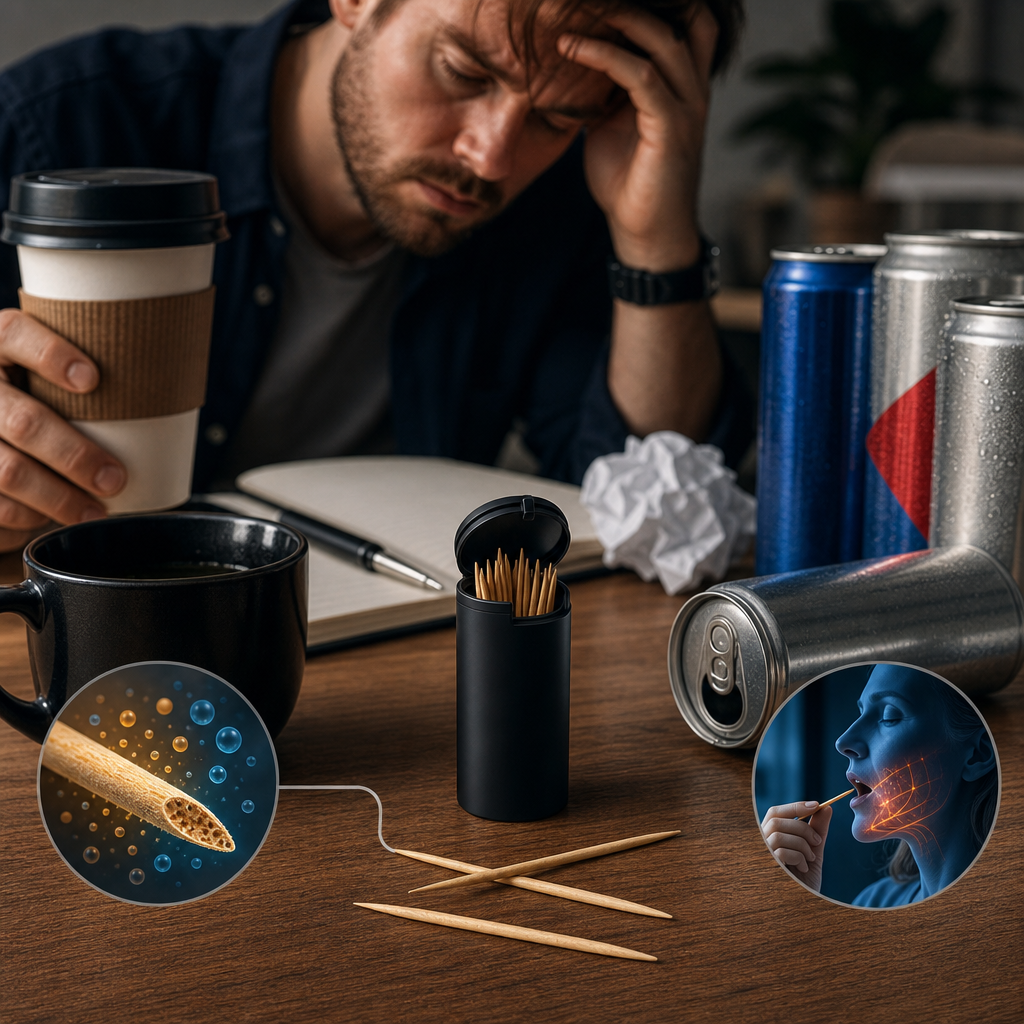
Our patented deep-infusion technology saturates each toothpick with ingredients that address specific withdrawal challenges. When you place a pick in your mouth, you're not just chewing on flavored wood; you're activating a sensory experience that naturally increases saliva flow and oral stimulation. This mouth-watering effect is intentional and therapeutic, especially for those managing xerostomia (dry mouth), which nicotine withdrawal often exacerbates.

The physical act mimics smoking closely enough to satisfy the behavioral craving while being completely nicotine-free. You hold it, you keep it in your mouth, you can use it in social situations, and you get the flavor and sensation your mouth expects. But there's no addictive substance, no calories, and no sugar. The experience lasts 25-40 minutes per use, which means one pick covers most cravings from start to finish.
Each toothpick delivers caffeine and B-vitamins designed to support mental clarity during the foggy, low-energy phase of withdrawal. As your brain's dopamine system rebalances, that extra support helps you think clearly and maintain motivation when it's hardest.
What to do next: Try using our picks specifically for your highest-trigger moments first. If stress is your biggest driver, start there. You'll build confidence with a tool that actually works for your specific situation.
The Science Behind Our Nicotine-Free Craving Relief
Our craving relief formula works without any nicotine by focusing on what your mouth and brain actually need during withdrawal. The foundation is stimulation. We use a natural extract called jambu, which creates a distinct tingle sensation on your lips and tongue. This isn't discomfort; it's activation. That tingle stimulates the nerve pathways in your mouth, creating the sensory intensity that smokers unconsciously crave.
Think of it this way: smoking delivers a sharp sensory experience. Your mouth feels the heat, the flavor, the texture, and the nicotine hit all at once. When you suddenly remove that input, your mouth feels understimulated. The jambu-infused tingle reactivates those nerve pathways, satisfying the need for oral sensation without reintroducing nicotine.
The caffeine and B-vitamin blend addresses the energy and focus collapse that often accompanies early withdrawal. Your body became accustomed to the stimulant effect of nicotine; as it adjusts, brain fog and fatigue are common. These ingredients don't replace nicotine's dopamine effect, but they stabilize your mental state during the rebalancing period.
Bold, long-lasting flavor profiles matter more than people realize. During withdrawal, your taste buds often feel dull or metallic. A strong flavor provides immediate positive reinforcement and makes the oral experience feel rewarding rather than like deprivation.
We engineered our picks to be sugar-free and zero calories because we know that many people who quit smoking gain weight by substituting food habits. Our approach gives you the oral satisfaction without triggering a different unhealthy substitution pattern.
What to do next: Use your first pick specifically to notice the tingle sensation. It's designed to occur, and it's part of how the device works. That activation means the ingredients are actively stimulating your mouth and supporting craving relief.
Breaking the Hand-to-Mouth Cycle
The hand-to-mouth motion is one of the strongest behavioral anchors in smoking. Your body has performed this action thousands of times, often without conscious thought. Reaching for a cigarette becomes automatic in response to stress, boredom, or habit alone.
When you switch to our functional toothpicks, you preserve this critical ritual while removing the addictive substance. Your hand still reaches for something, your mouth still gets stimulation, and your brain still registers a sense of control and action. But the outcome is different: no nicotine, no harm, and active support for quitting.
This matters psychologically because quitting doesn't feel like pure loss. You're not white-knuckling through cravings with nothing in your mouth. You're replacing one tool with a better one that still satisfies the behavioral need. This subtle shift reduces the sense of deprivation that makes most quit attempts fail.
Many of our customers report that having a physical object to reach for reduces anxiety during withdrawal. The act of pulling out a pick, placing it in your mouth, and settling into the flavor experience creates a micro-pause that interrupts the automatic reach for a cigarette. Over time, this new habit becomes automatic instead.
The portability matters too. You can carry our picks anywhere, use them in social situations where smoking is happening around you, and have them ready during your highest-risk moments. Unlike some quit aids that require planning or special equipment, these are always accessible.

What to do next: Keep a pack of picks in your usual cigarette locations. If you normally kept cigarettes in your car, pocket, or desk, put picks there instead. This makes the substitution automatic and removes friction during moments of weakness.
Supporting Mental Focus and Stress Relief During Withdrawal
The mental component of nicotine withdrawal is often underestimated. Nicotine is a powerful cognitive enhancer, which is why smokers often report feeling sharper and more focused while smoking. When you quit, your executive function suffers temporarily as your dopamine system recalibrates.
Stress is the biggest relapse trigger during early withdrawal. When you're overwhelmed, your brain desperately wants to return to the thing that made stress feel manageable: nicotine. This is why so many people relapse during difficult weeks, not because they want to smoke, but because they need the stress relief they've become dependent on.
Our caffeine and B-vitamin infusion provides a modest cognitive lift during this transition. It's not a replacement for nicotine's effect, but it stabilizes your mental state enough to weather the withdrawal period without relapsing during high-stress moments.
The oral stimulation itself reduces stress. When you place a pick in your mouth and focus on the flavor and sensation, you're activating a parasympathetic response that naturally calms your nervous system. The tingle sensation and mouth-watering effect create a positive sensory experience that interrupts stress spiraling.
Many quitters also find that having a concrete tool for withdrawal reduces the psychological distress of feeling helpless. Instead of white-knuckling through cravings with nothing but willpower, you have an actual device designed to help. This shift from "I'm suffering through this" to "I'm using a tool to manage this" changes how your brain perceives the challenge.
What to do next: Use picks proactively during predictably stressful moments, not just when cravings hit. Before a difficult meeting, conversation, or time of day when you typically smoked, have a pick ready. This prevents stress from escalating into a craving crisis.
Real Strategies for Using Functional Picks Throughout Your Day
Successful nicotine withdrawal management isn't about willpower alone; it's about having a concrete system for each high-risk moment. Here's how to use our functional toothpicks strategically throughout your day.
First thing in the morning: This is when many people face their strongest habit craving. Instead of reaching for your first cigarette with coffee, start with a pick. The ritual will feel similar, but your mouth gets stimulation without nicotine. The caffeine boost helps with the energy dip many experience in early withdrawal.
During work stress: Keep picks at your desk. When you feel overwhelmed, anxiety spiking, or the urge to step outside for a smoke, use a pick instead. The 25-40 minute duration means it covers most work crises. The combination of oral stimulation and the tingle sensation provides immediate relief.
After meals: This is a classic smoking trigger for many people. Your brain associates the end of eating with reaching for a cigarette. Place a pick in your mouth right after finishing food, and you've interrupted that automatic chain before it starts.
Social situations with other smokers: This is one of the hardest moments. You're around the smell, the ritual, and people you used to smoke with. Having a pick in your mouth gives you something to do, keeps your hands busy, and provides the same kind of oral experience as smoking. You're not standing there as a non-smoker watching others; you're using your own tool.
During cravings: When a strong craving hits, don't wait for it to pass. Use a pick immediately. Most cravings last 3-5 minutes on their own, but the anticipation and dread often last longer. Taking action with a pick shortens the psychological experience significantly.
Evening wind-down: Many smokers used cigarettes to transition between work and relaxation. A pick can fill this role, signaling to your brain that the workday is over without introducing nicotine.

What to do next: Choose just one high-risk moment tomorrow and commit to using a pick there instead of reaching for a cigarette. Small wins build momentum and prove to yourself that the substitution works.
Why Traditional Quit Methods Fall Short
Nicotine replacement therapy (patches, gum, lozenges) addresses the chemical side of addiction but often ignore the behavioral component. You're solving half the problem. Your body stops craving nicotine, but your hand still reaches for something, your mouth still wants stimulation, and your brain still expects the ritual.
Cold turkey sounds noble but has one of the lowest success rates because it tries to eliminate the addiction without replacing the behavior. Your willpower can only last so long when every fiber of your being is screaming for the ritual you've practiced thousands of times.
Prescription medications like Chantix can reduce cravings, but they don't address the hand-to-mouth habit or provide the sensory feedback your mouth expects. Many people find themselves chewing gum or snacking constantly because their mouth still feels empty.
Counseling and support programs are valuable for the psychological and social aspects, but they don't give you a physical tool for the moment when a craving hits and you're alone. You need something in your hand, not advice in your ear.
Most people also fail because they switch one harmful habit for another. They quit smoking and gain 20 pounds from candy and snacking, or they shift to constant gum chewing, or they become anxious and irritable without addressing the behavioral void. Traditional quit-smoking aids often miss the oral fixation component that keeps people reaching for replacements.
Our approach combines the best of these methods: you get craving relief without nicotine, a behavioral replacement that matches the ritual, sensory satisfaction that prevents substitution habits, and functional support for mental clarity and stress management. It's comprehensive because withdrawal is multifaceted.
What to do next: If you've tried other methods before, notice what worked and what didn't. If patches worked for the chemical side but you still felt lost behaviorally, know that filling that gap is the next evolution in your quit attempt.
Your Path to Successful Nicotine Independence
Quitting nicotine is difficult because it addresses multiple levels of addiction at once: the chemistry of dependence, the psychology of habit, the ritual of behavior, and the social dimensions of smoking. Success requires a tool that handles all of these simultaneously.
We created Xero Picks because we recognized that most smokers understand the "why" behind quitting. They know the health risks, the financial cost, and the social stigma. What they need is the "how"—a practical, accessible tool that makes quitting feel achievable rather than like months of suffering and deprivation.
Our nicotine-free toothpicks use patented infusion technology to deliver caffeine, B-vitamins, and natural jambu extract in a form that replaces the hand-to-mouth ritual while providing active craving relief. Unlike replacements that feel like substitutes, these feel like an upgrade—a tool designed specifically for supporting your successful quit attempt.
The path forward is straightforward: identify your highest-trigger moments, have our picks available before cravings hit, and let the combination of sensory stimulation, functional ingredients, and behavioral replacement do the work. Most acute withdrawal symptoms ease within three weeks. With the right tool supporting you through those critical early days, relapse becomes far less likely.
Your next step: Start with a single pack and use them specifically for your three highest-risk moments tomorrow. Notice how the sensation works, how long the flavor lasts, and how the ritual feels compared to cigarettes. That direct experience is what shifts quitting from "I have to suffer through this" to "I have a system that actually works."
The nicotine independence you're seeking isn't just about willpower. It's about having the right tools, understanding what your body actually needs during withdrawal, and replacing a harmful habit with something that supports your health and your freedom.