Top 7 Nicotine-Free Craving Management Tools for Smokers Quitting Today
Table of Contents
- Why Smokers Struggle With Cravings and Why Traditional Methods Fall Short
- The Hand-to-Mouth Habit: Understanding Your Real Challenge
- Tool 1: Behavioral Substitutes That Actually Work
- Tool 2: Functional Toothpicks With Cognitive Support
- Tool 3: Stress Management Techniques to Reduce Cravings
- Tool 4: Structured Daily Routines That Break the Smoking Cycle
- Tool 5: Nutritional Support to Balance Brain Chemistry
- Tool 6: Social Strategies and Accountability Systems
- How XERO PICKS QUIT Combines Multiple Tools Into One Solution
- Your Path Forward: Building a Personalized Craving Management Plan
- Frequently Asked Questions (FAQ)
Why Smokers Struggle With Cravings and Why Traditional Methods Fall Short
Quitting smoking is hard. Not because you lack willpower, but because cravings are real neurological events that hijack your attention and create genuine physical discomfort. The good news? You don't have to white-knuckle your way through. Effective nicotine-free craving relief comes from using multiple tools at once, each addressing a different part of the puzzle.
We've built our understanding of craving management around seven proven strategies. When you layer them together, they create a system stronger than any single approach. Let's walk through each one, then show you how to combine them into a personalized plan that actually works.
Cravings aren't a character flaw. They're the result of neural pathways that have been reinforced thousands of times. Every cigarette you smoked reinforced connections between specific triggers (stress, coffee, boredom, social situations) and the reward your brain received. Those pathways don't disappear overnight.
Traditional quit-smoking approaches often focus on willpower alone. Cut out cigarettes. Don't think about smoking. White-knuckle through the urges. The problem? This leaves the underlying triggers intact and forces your brain to constantly resist. That's exhausting, which is why most people return to smoking within weeks.
What works better is replacing the behavior, not just removing it. You keep the ritual because rituals serve a purpose. They mark transitions, provide sensory input, manage stress, or offer a moment of control. By keeping the positive parts of the ritual while removing the nicotine and smoke, you maintain the psychological benefit without the harm.
What to do next: Stop thinking about "quitting smoking" as subtraction. Frame it as a swap: you're replacing one oral habit with a better one that serves the same purpose.
The Hand-to-Mouth Habit: Understanding Your Real Challenge
If you've smoked for years, your hands and mouth know the routine better than your conscious mind. The hand-to-mouth motion is a habit loop all on its own. Breaking it means understanding what the smoking ritual actually provided.
Was it a stress management tool? A way to take a break? A social lubricant? A way to keep your hands busy? A signal to your brain that it was time to transition between tasks? Each person's smoking habit has slightly different drivers, and your craving management plan needs to address your specific ones.
Consider your typical smoking day. Which cigarettes were hardest to quit: morning coffee cigarettes? Post-meal cigarettes? Stress cigarettes? Social cigarettes? Drive-time cigarettes? Each type serves a different function, which means each one needs its own replacement strategy.
What to do next: Track your smoking patterns for a few days. Note the time, the trigger, and what you were feeling or doing. This data is your foundation for building a real craving management system.
Tool 1: Behavioral Substitutes That Actually Work

A behavioral substitute is anything that mimics the physical action and sensory input of smoking without the nicotine or smoke. The goal is to provide your hands and mouth with something to do while your brain adjusts.
Good substitutes have three qualities: they're portable, they deliver sensory stimulation (taste, texture, or sensation), and they create a small ritual. Chewing gum is portable but doesn't feel much like smoking. Sucking on hard candy gives flavor but not texture. A behavioral substitute that combines multiple sensory inputs works better.
Flavored oral devices like toothpicks can serve this role well. They keep your hands and mouth engaged, provide flavor stimulation, and create a small ritual that marks the moment. Unlike cigarettes, they're not timed by how fast you smoke them, which means you control the ritual rather than the ritual controlling you.
What to do next: Identify one high-trigger moment (morning coffee, after lunch, stressed at work) and have a specific substitute ready. Test it for a week before adding it to other trigger moments.
Tool 2: Functional Toothpicks With Cognitive Support
Here's where nicotine-free craving relief becomes smarter than simple behavioral substitution. A functional toothpick delivers taste, texture, and ritual while also supporting your brain's neurochemistry during the quit.
We designed Xero Picks with ingredients that support everyday cognitive function and energy. Our infused picks deliver B-vitamins and light caffeine alongside a long-lasting flavor profile. When a craving hits, you're not just keeping your hands busy. You're also giving your brain legitimate support.
This matters because part of why people return to smoking is the energy dip. Your brain became accustomed to the stimulant effects and other neurochemical shifts smoking triggered. A functional oral pick addresses that directly. You get the flavor and ritual satisfaction of the habit replacement, plus targeted nutritional support that helps your brain adjust.
What to do next: Choose one flavor profile you genuinely enjoy. Keep a pack with you during your highest-risk times. Use it consciously: when a craving hits, reach for it and give yourself permission to enjoy the flavor and sensation fully.
Tool 3: Stress Management Techniques to Reduce Cravings
Stress is one of the top craving triggers. When your nervous system is activated, your brain remembers that smoking used to calm things down. This is where stress management becomes part of your craving strategy, not something separate.
You don't need meditation or a gym membership, though those help. Simple techniques work: breathing exercises (box breathing: inhale 4 counts, hold 4, exhale 4, hold 4), brief walks, stretching, or talking to someone. The goal is to activate your parasympathetic nervous system before a craving overwhelms you.
The timing matters. Don't wait until you're desperate to quit. Build stress management into your daily rhythm so your baseline activation level is lower. This makes cravings less intense when they hit. A 10-minute walk at lunch or three minutes of breathing work after a meeting creates real physiological change.
What to do next: Pick one stress-reduction technique that fits your lifestyle. Do it daily, not just when you crave cigarettes. You're training your nervous system, not just treating individual cravings.
Tool 4: Structured Daily Routines That Break the Smoking Cycle
Smoking becomes woven into your daily schedule. Morning coffee means morning cigarette. Lunch means cigarette. Driving means cigarettes. Those time markers don't disappear when you quit, but you can reassign them.

Build a new routine around the same time markers. Morning coffee becomes morning coffee plus a functional toothpick and a 5-minute walk. Lunch becomes lunch plus a flavored pick and a short breathing exercise. Driving becomes driving with a pick within reach and a playlist or podcast that keeps your attention.
The ritual continuity matters more than the specific activity. Your brain finds comfort in predictable sequences. By keeping the same time structure but changing what happens, you satisfy the ritual need while removing the cigarette.
What to do next: Take your top three smoking moments and design a replacement ritual for each. Write it down. Make it specific enough that you can do it on autopilot: "9am coffee + Xero Pick strawberry + 2-minute walk around the block" works better than "manage morning cravings better."
Tool 5: Nutritional Support to Balance Brain Chemistry
Nicotine affects brain chemistry. When you remove it, your brain chemistry shifts temporarily, which is part of why cravings feel so intense. Nutritional support can ease this transition.
Your brain relies on specific nutrients for dopamine and serotonin production. B-vitamins, particularly B6 and B12, are part of that pathway. Adequate hydration supports neurological function and reduces fatigue. Protein supports neurotransmitter production. During the quit, paying attention to these nutrients accelerates your brain's adjustment.
This doesn't require expensive supplements or special diets. Eat protein at meals, drink water consistently, include leafy greens, and consider a basic multivitamin if your diet is spotty. The combination of these basics plus a functional pick that delivers targeted B-vitamin support creates real neurochemical support without a prescription.
What to do next: Audit your current nutrition. Add one thing: better hydration, protein at each meal, or a simple multivitamin. Track how you feel over two weeks. Small nutritional changes create measurable differences in how you experience cravings.
Tool 6: Social Strategies and Accountability Systems
Quitting in isolation is harder. Social strategy isn't about force or judgment; it's about using your environment and relationships to support your goal.
Tell people you trust what you're doing and why. Ask them to check in with you. Find a quit-buddy who's also working on changing a habit (doesn't have to be smoking). Join an online community of people quitting. These create positive social reinforcement without judgment. When you're tempted, you have someone to text. When you succeed, you have someone to celebrate with.
Also redesign your social environment. If your friend group centers on smoke breaks, find other activities together. If you always smoke with certain people at certain times, temporarily avoid those moments or bring your replacement ritual with you. This isn't forever; it's just while your neural pathways reset. Most people can reintegrate old social situations after a few months because the craving intensity has dropped dramatically.
What to do next: Identify one person you trust and tell them your plan. Ask them to check in weekly. That simple step dramatically increases success rates.
How XERO PICKS QUIT Combines Multiple Tools Into One Solution
We didn't design Xero Picks to replace all of these strategies. We designed them to complement all of them by solving one specific piece: the behavioral substitute with functional support.

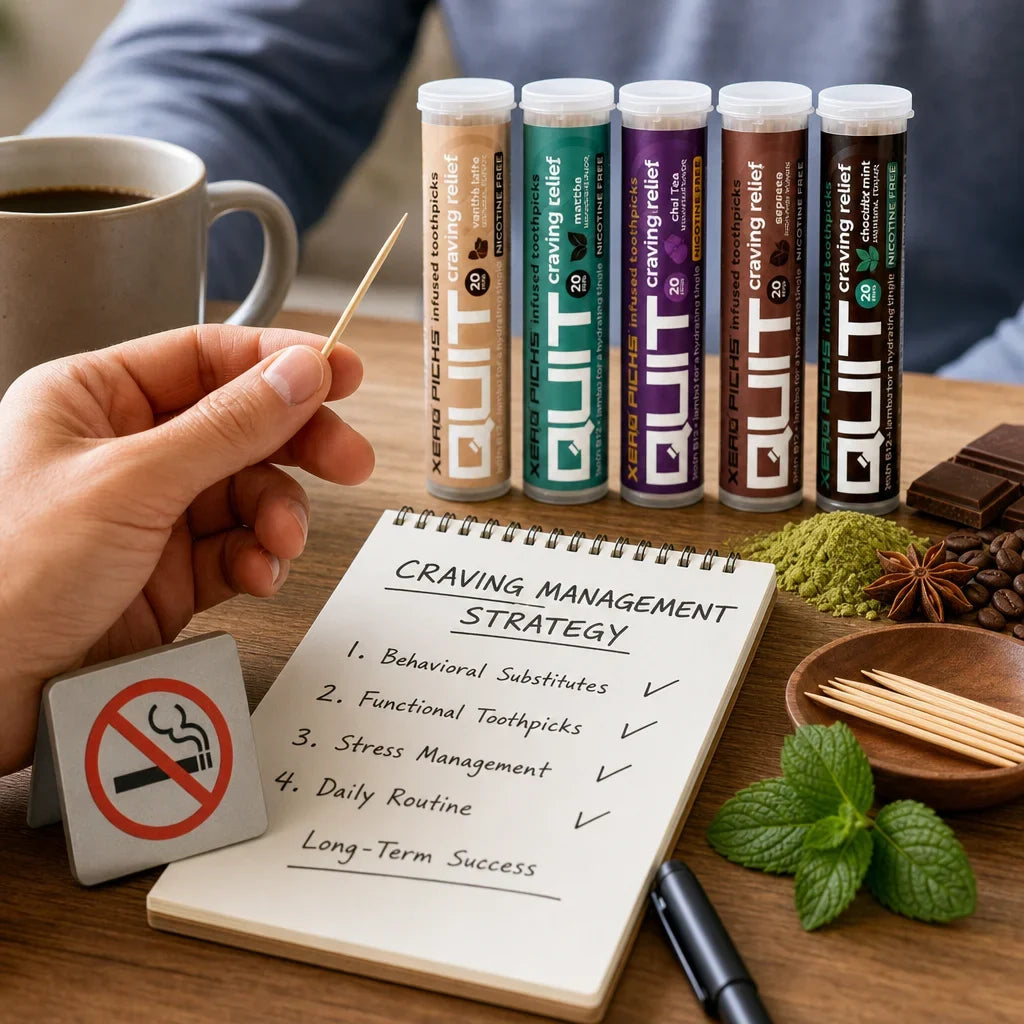
When you use our picks, you're handling the hand-to-mouth habit and providing your brain with sensory input and nutritional support simultaneously. But that's only one tool. Our Quit Variety Pack works best when you're also managing stress, building better routines, supporting your nutrition, and using social accountability.
We've seen the most success with customers who combine our picks with at least three of the other strategies in this list. The picks handle the ritual; the other tools handle the triggers and neurochemistry. Together, they create a system that actually works.
What to do next: Start with one week of tracking your patterns and one stress management technique. Then add a functional pick to your top-three trigger moments. Notice how much easier the process feels when you're not relying on willpower alone.
Your Path Forward: Building a Personalized Craving Management Plan
Quitting doesn't follow a standard formula. Your craving drivers are different from someone else's. Your schedule is different. Your stress tolerance is different. Which means your system needs to be personalized, not prescriptive.
Here's a simple process: Identify your top three trigger moments (when cravings are strongest). For each one, choose a strategy from the list above. Stress trigger? Add a breathing exercise. Routine trigger? Build a new ritual. Boredom trigger? Add a functional toothpick plus a structured activity. Don't try to change everything at once. Change three things, do them consistently for two weeks, then evaluate.
This approach works because you're not fighting your brain. You're redirecting it. You're not white-knuckling through discomfort. You're replacing it with better rituals that serve the same psychological purpose. Small daily choices compound into lasting change.
Your success doesn't depend on willpower. It depends on systems. Build the systems first, and the willpower follows naturally.
Xero Picks is creating a new category: functional oral rituals. Contact us today for more information at info@xeropicks.com.
Frequently Asked Questions (FAQ)
How do your toothpicks help with the hand-to-mouth habit that comes with quitting smoking?
We designed our toothpicks to replace the oral ritual that smokers rely on throughout the day. When you use one of our picks, you're engaging the same sensory experience (texture, flavor, jaw movement) without the nicotine or harmful chemicals. Our patented infusion technology delivers a long-lasting flavor and functional ingredients like caffeine or B-vitamins, which keeps you mentally engaged and helps redirect that automatic reach-for-a-cigarette impulse into something productive.
What makes your nicotine-free approach different from other craving relief methods?
We don't try to replicate nicotine's effects because our goal is to help you break free from dependency altogether. Instead, our picks address the behavioral and sensory parts of your habit while supporting your body's needs during the quitting process. The combination of oral stimulation, functional ingredients, and the ritual of using a toothpick tackles multiple reasons why cravings hit hard, rather than focusing on just one aspect of your struggle.
How long does the flavor last, and will one pick get me through a craving?
Our deep-infusion technology means each pick delivers flavor and functional support for an extended period, typically lasting through the peak of a craving. We recommend keeping our picks accessible throughout your day so you can reach for one whenever that urge strikes, rather than relying on a single pick to solve everything.