

Top Behavioral Replacement Tools for Breaking Cigarette Oral Habits
Table of Contents
- Why Oral Habits Make Quitting Cigarettes Harder Than You Think
- Understanding the Hand-to-Mouth Ritual and Why It Matters
- Portable Flavor as a Behavioral Bridge
- How Functional Ingredients Support Your Routine Change
- Xero Picks Quit: Designed for the Familiar Ritual
- Finding Your Replacement Tool That Actually Fits Your Life
- Combining Behavioral Tools for Better Success
- Staying Consistent When Cravings Hit
- Making Your New Routine Stick
- Frequently Asked Questions (FAQ)
Why Oral Habits Make Quitting Cigarettes Harder Than You Think
Quitting cigarettes isn't just about stopping nicotine. The hardest part for many people is breaking the ritual itself—that automatic reach for a cigarette after a meal, during stress, or while waiting. The mouth habit is deeply wired into your daily routine, your hands know exactly what to do, and your brain expects that familiar sensation. This is where behavioral replacement tools make a real difference.
We've built our nicotine-free hand-mouth toothpicks specifically for people who want to break the cigarette cycle while keeping the ritual. The key is understanding why oral habits are so powerful, then choosing the right replacement that matches how you actually live. Let's walk through what works.
Smoking is two habits in one. The first is physiological: your body is used to nicotine. The second is behavioral: your mouth, hands, and mind expect a routine action at specific times and in specific situations.
Most people focus only on the nicotine part. They use patches or gum, which address the chemical craving, but they ignore the ritual. This leaves a gap. Your hands still want something to do. Your mouth still expects a familiar routine. You're staring at your coffee without a cigarette after it, sitting in your car without reaching for the pack, or taking a break without that automatic gesture. The behavior stays even after the nicotine leaves your system.
Research on habit formation shows that behaviors rooted in triggers (stress, after eating, social situations, boredom) are among the hardest to change because they're automatic. Your brain has built neural pathways that say "this situation means that action." Breaking a 5-year, 10-year, or 20-year habit requires more than willpower. You need a replacement that feels satisfying enough to interrupt the old pattern.
That's why oral habit replacement tools matter. They don't just distract you. They satisfy the same sensory needs your cigarette did: something to put in your mouth, a flavor or sensation, a hand-to-mouth motion, and a brief ritual that marks a moment in your day.
Understanding the Hand-to-Mouth Ritual and Why It Matters
The hand-to-mouth motion is more powerful than you might realize. It's not trivial. It's a core part of why cigarettes work so well as a habit tool.
Think about what happens in that moment: you reach, you feel the weight of something in your hand, you lift it to your mouth, you pause for a few seconds, you exhale. That sequence has texture, timing, and rhythm. Your body and brain have learned to crave that exact sequence, not just the nicotine or flavor at the end.
When you replace cigarettes with something that skips the hand-to-mouth part—like gum you chew or a lozenge you let dissolve—you're missing a crucial sensory component. Your hands feel empty. The ritual feels incomplete. That's why many people struggle to stick with those replacements, even if they work chemically.
A functional replacement tool should deliver several things at once:
- A physical object your hand can hold
- A deliberate motion that mirrors the original habit
- A sensation in your mouth (flavor, texture, or a subtle tingle)
- A defined start and finish (not something you chew for 20 minutes)
- Portability so you can use it in the same situations as before
When your replacement tool checks these boxes, your brain gets the signal that the ritual is complete. You've satisfied the behavioral craving, which makes it easier to dismiss the physiological one.
Portable Flavor as a Behavioral Bridge

Flavor does two things in a replacement routine: it occupies sensory attention and it makes the new habit enjoyable enough to repeat.
When you're managing a craving, part of the struggle is that your brain is looking for stimulation. A cigarette provides flavor, sensation, and something to focus on. If your replacement tool is bland, your mind will wander back to what you're missing. But if it has real flavor—something you actually want to put in your mouth—your attention shifts.
Here's a practical example: You finish lunch and your automatic impulse fires. For years, you've reached for a cigarette. Now, instead, you reach for a pick with a flavor you genuinely like. Maybe it's a bright citrus, a cool mint, or something with a sour edge. That flavor hits. Your mouth is engaged. The ritual happens. Fifteen seconds later, it's done, and you've successfully interrupted the old pattern without white-knuckling through a craving.
Portability matters here too. You need something small enough to keep in your pocket, your desk, your car, or your bag. If your replacement tool is hard to access or requires special setup, you'll fall back on the familiar habit when you need it most. A pick slides into your pocket. It's ready when you are. No preparation. No mess.
The key is matching the flavor to your preferences and your triggers. Some people need something fresh after meals. Others need something sweet when stress hits. A few prefer a bold, tart sensation to really disrupt the craving pattern. The more your replacement feels like a choice you're making (rather than a consolation prize), the longer you'll stick with it.
How Functional Ingredients Support Your Routine Change
Beyond flavor, some oral replacement tools include functional ingredients that add real value to your daily routine. This isn't about magic fixes. It's about layering small benefits that reinforce your new habit and make it worth maintaining.
Consider caffeine. If you're used to cigarettes as a quick pick-me-up during afternoon slumps, a replacement with 15 mg of caffeine (plus supporting B vitamins) keeps that sensory routine intact while giving your body something it actually needs. You're not just replacing a bad habit. You're replacing it with something that works for you.
Other people benefit from ingredients like xylitol, which supports mouth comfort when they're managing a dry feeling. The ritual stays the same—you reach, you use a pick, you feel better. But now your mouth actually benefits from it.
The point is this: don't choose a replacement tool based solely on "it's better than smoking." Choose one that makes your daily life better. If you're reaching for that pick because it gives you sustained energy or helps you feel fresher after lunch, you're not making a sacrifice. You're upgrading.
This layering effect also matters psychologically. When your brain starts associating your new routine with concrete benefits—more focus, better mouth feel, fresher breath—the old habit becomes less tempting. You're not white-knuckling. You're actively choosing something better.
Xero Picks Quit: Designed for the Familiar Ritual
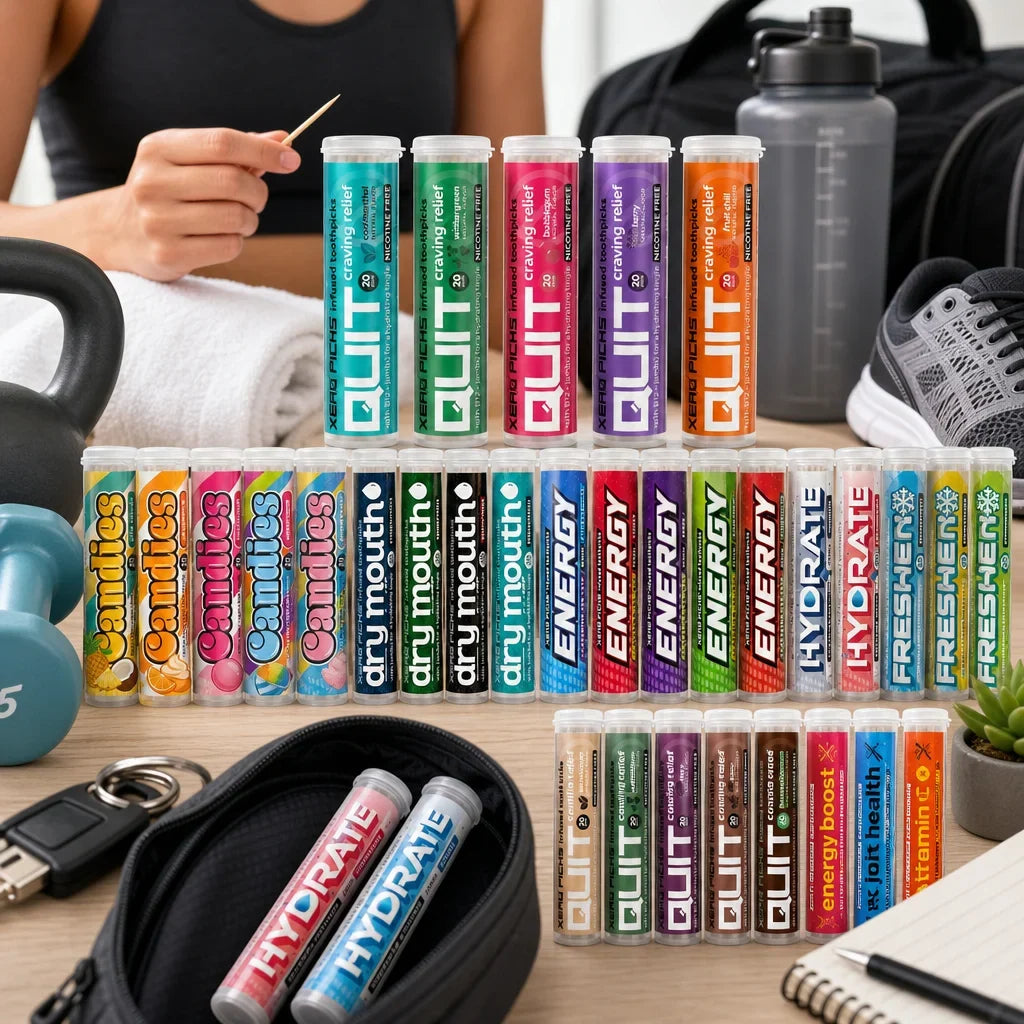
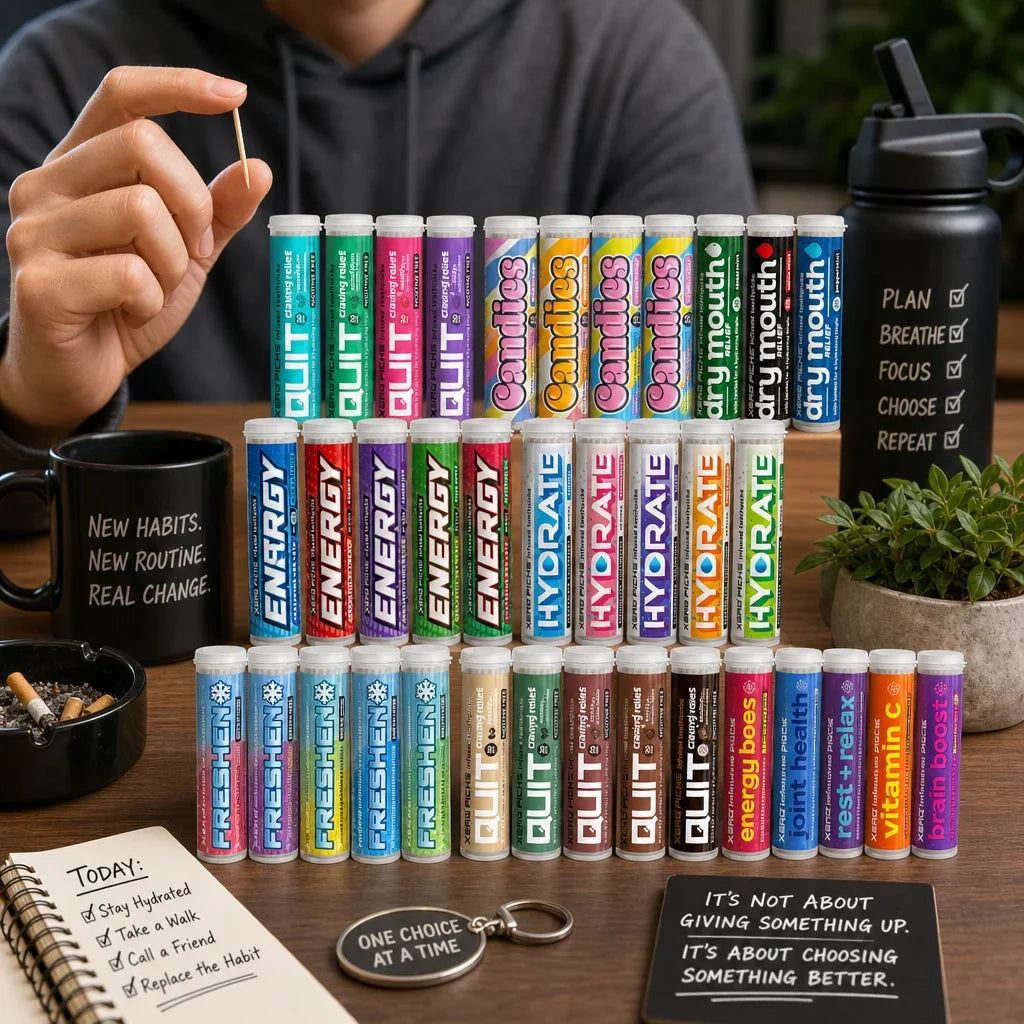
We created our QUIT collection with one goal: to match the hand-to-mouth ritual of a cigarette so closely that the transition feels natural.
Each pick is designed to be held, placed in your mouth, and finished in a few seconds. The hand motion is familiar. The ritual has a clear beginning and end. The flavor is real and satisfying, not a substitute that reminds you of what you're missing.
Our picks are also completely portable. No special equipment. No batteries. No subscription to a program. You keep a few in your pocket, in your bag, in your car, wherever you typically smoke. When the urge hits, you're ready.
We've built several flavor profiles into the QUIT collection because we know that what works for one person might not work for another. After a meal, you might want something fresh. During stress, you might want something bold. During a social moment, you might want something fun. The collection covers these needs without requiring you to plan ahead or order custom options.
Most importantly, our picks are nicotine-free. You're not trading one nicotine habit for another. You're breaking the cycle entirely while keeping the part that actually matters: the ritual.

Finding Your Replacement Tool That Actually Fits Your Life
The best behavioral replacement tool is the one you'll actually use. This sounds obvious, but most people pick a replacement based on what they think they should use, not what fits their real life.
Start by identifying your personal trigger patterns. When do you typically reach for a cigarette?
- After meals
- During stress or boredom
- While driving or commuting
- On social breaks
- While waiting
- During a particular time of day
Once you know your triggers, think about what your replacement needs to do in those moments. If you smoke while driving, your tool needs to be safe and quick to use with one hand. If you smoke socially, your tool should be something you won't feel self-conscious about. If you smoke during stress, your tool should deliver a sensation strong enough to interrupt the craving.
Next, consider what makes a habit stick for you personally. Some people respond well to flavor rewards. Others need functional benefits (like a caffeine boost or mouth freshness). Still others need the simplicity of a familiar motion. The tool that checks the most boxes for your life is the one you'll reach for when motivation is low.
Finally, test your choice in real situations before you decide it's "not working." A replacement tool needs a fair trial—at least a few days of regular use in your actual trigger moments. Your brain is used to one specific routine. It takes repetition to build a new one. If you're white-knuckling after a week, the tool might not be right. But if you're just bored or uncomfortable because the routine is new, stick with it. That discomfort passes.
Combining Behavioral Tools for Better Success
Breaking a oral habit is rarely a one-tool job. The most successful approaches layer multiple strategies that work together.
Behavioral replacement is the foundation. That's your physical, sensory tool. But you can strengthen it with other approaches:
- Remove friction from your new habit. Keep your replacement easily accessible in the places you normally smoke.
- Add friction to the old habit. Don't keep cigarettes at home or in your car. This isn't punishment. It's just making the old choice harder than the new one.
- Identify your specific triggers and plan for them. Don't wait until stress hits. Know what you'll use instead, and have it ready.
- Connect your new routine to something you actually want. If you use a flavored pick every morning with your coffee, you're not just breaking a habit. You're building a positive ritual that feels like a reward.
- Track your progress. Note when you successfully use your replacement instead of reaching for a cigarette. Small wins add up and build confidence.
The research on habit change shows that combining these layers creates what's called "habit stacking." Your new routine becomes linked to existing moments in your day (after coffee, after lunch, during afternoon break), and multiple reinforcement mechanisms (the flavor, the motion, the functional benefit, the progress tracking) make it stronger than any single tool alone.
Staying Consistent When Cravings Hit
Consistency is hardest in the first two weeks and then again around the three-month mark. These are the times when your brain is most likely to suggest "just one cigarette" or "maybe this replacement thing isn't working."
In the early days, your body is adjusting. If you've been using nicotine, your physiology is changing. This can feel uncomfortable. Your replacement tool is brilliant for the behavioral craving, but it won't eliminate the physiological adjustment. That's okay. You can use your replacement tool and also acknowledge that your body needs time to recalibrate. Bring a patch, use gum for the chemical part, and use your replacement tool for the ritual. They work together, not against each other.
Around the three-month mark, something shifts. You've built a new routine. Your brain is no longer screaming for cigarettes every hour. You've had wins. But then—because you're human—a random moment hits hard. A stressful call. A social situation. A time of day that used to always mean a cigarette. Your brain wakes up and says "remember this?"
This is where the tools you've already built matter most. You have a replacement you know works. You have a ritual you've practiced. You have evidence from the past three months that you can use it instead. Lean on that. Use your replacement immediately, not as a "instead of cigarettes" choice but as your new default. The urge will pass faster than you expect.

Keep your replacement accessible during these high-risk moments. At the three-month mark, you might not feel like you need it anymore. That's precisely when you do. The habit disruption is still being reinforced. Regular use keeps the new routine locked in.
Making Your New Routine Stick
Behavioral change research shows that new habits become truly automatic after about 60 to 90 days of consistent practice. This doesn't mean you'll never crave a cigarette. It means that your new routine will feel as natural as the old one, and reaching for your replacement will be your instinct, not your effort.
After 60 days, something shifts. You stop having to think about it. You're at lunch, and before your brain even catches up, your hand reaches for your pick. You're on a break at work, and the routine happens automatically. This is the moment when your new habit has replaced the old one, not as a patch or a trade-off, but as your actual default.
At this point, you can start to trust that you've genuinely changed. The ritual has moved from something you have to manage to something you choose because it's better. The flavor is satisfying. The motion is familiar. The benefits are real. Your mouth feels fresher. Your body isn't depending on nicotine. You're free from the constant pull.
To make this stick, keep a few things in place even after months or years:
- Keep your replacement accessible. Old habits can resurface if you're under major stress and your tools aren't handy.
- Celebrate the wins. After a year, notice that you've saved money, your health markers have improved, you smell better, your clothes smell better. These concrete benefits reinforce the choice you made.
- Understand that occasional cravings are normal. They don't mean you've failed or that you're going backward. They just mean you used to smoke. A quick use of your replacement, and you're past it.
- Consider connecting with others doing the same work. Community matters. Whether it's a friend quitting too or an online group, knowing you're not alone makes the routine stronger.
Breaking the oral habit of smoking is hard work, but it's absolutely doable when you use tools that respect both the physiological and behavioral parts of the addiction. Start with a replacement that matches your ritual, layer it with other strategies, stay consistent through the adjustment period, and trust that a new habit will replace the old one.
Your first step is identifying when and why you smoke most, then finding a replacement tool that addresses those exact moments. We built our QUIT collection to handle this specific challenge. Keep one in your pocket, use it when the impulse hits, and let the ritual do the work. Small daily choices create lasting change—one pick at a time.
Explore XERO PICKS® flavored and infused toothpicks at https://www.xeropicks.com. Compare collections, flavors, and current product ingredients to find a pick that fits your everyday routine.
Frequently Asked Questions (FAQ)
How are Xero Picks different from other oral habit replacement tools?
We designed our toothpicks specifically to replicate the hand-to-mouth ritual that makes quitting so challenging. Unlike gum or lozenges, our picks give you something to hold, flavor to enjoy, and a tactile experience that mirrors familiar routines. We offer ten distinct collections, so you can choose what works best for your lifestyle, whether that's a caffeine boost, relief for a dry-feeling mouth, or simply a flavor you love.
Can I use Xero Picks if I'm not trying to quit smoking?
Absolutely. We created our collections for adults seeking portable mouth freshness and convenient daily routines, not just for smoking cessation. Many of our customers enjoy our energy picks for a caffeine alternative, our xylitol picks for dry mouth comfort, or our flavored varieties simply because they like the taste and convenience. Our products stand on their own as everyday flavor and freshness options.
Which Xero Picks collection should I choose to support a routine change?
That depends on what you're looking for. Our Quit collection is specifically designed for adults replacing hand-to-mouth habits with a familiar ritual. If you want functional support, our Energy picks deliver 15 mg of caffeine plus B vitamins, while our Dry Mouth picks use xylitol and jambu for comfort. We recommend starting with a flavor profile you genuinely enjoy, since consistency matters most when building new habits.